The Role of Rubber Components in Ensuring Pump Efficiency
Rubber components are integral to pump systems due to their unique properties. These components provide excellent sealing, vibration damping, and wear resistance, making them indispensable in maintaining the efficiency and functionality of pumps.
Rubber components play a critical role in the performance and efficiency of pumps across various industries. These components, known for their flexibility, durability, and resistance to harsh environments, contribute significantly to the reliability and longevity of pumps. This article explores the essential functions of rubber components in pumps, highlighting their importance in ensuring optimal pump efficiency.
Why Rubber Components are Essential in Pumps
Rubber components are integral to pump systems due to their unique properties. These components provide excellent sealing, vibration damping, and wear resistance, making them indispensable in maintaining the efficiency and functionality of pumps. The adaptability of rubber materials to different operational conditions ensures that pumps operate smoothly, even in the most demanding environments.
Types of Rubber Components in Pumps
Seals and Gaskets
Seals and gaskets are critical rubber components used to prevent leaks in pump systems. They ensure that fluids are contained within the pump and that there is no cross-contamination between different media. Rubber seals and gaskets provide a tight seal, accommodating various pressures and temperatures, which enhances the overall efficiency of the pump.
O-Rings
O-rings are circular rubber components used to seal connections between different parts of the pump. They are essential in preventing leaks at joints and interfaces, maintaining the integrity of the pump system. O-rings are designed to withstand high pressures and temperatures, making them suitable for a wide range of applications.
Diaphragms
Diaphragms are flexible rubber components that separate different chambers within a pump. They play a crucial role in controlling the flow of fluids and gases, ensuring accurate and efficient pumping action. Diaphragms are particularly important in diaphragm pumps, where their flexibility and durability are key to the pump’s performance.
Couplings and Bushings
Couplings and bushings are rubber components used to connect and support rotating parts within a pump. They help absorb vibrations and reduce noise, protecting the pump and its components from wear and tear. Rubber couplings and bushings enhance the longevity of the pump by minimizing mechanical stress and ensuring smooth operation.
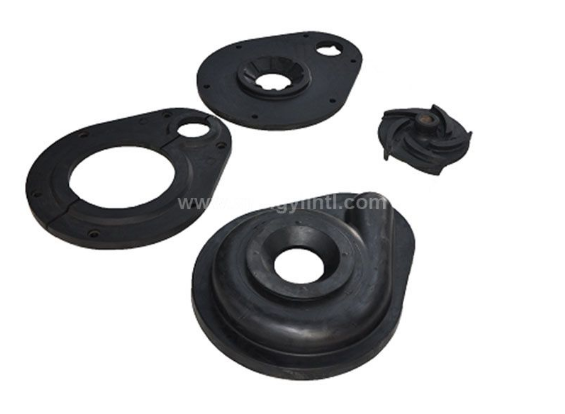
Functions of Rubber Components in Enhancing Pump Efficiency
Sealing and Leak Prevention
One of the primary functions of rubber component for pumps is sealing and leak prevention. Rubber seals, gaskets, and O-rings create a tight barrier that prevents fluids from escaping the pump system. Effective sealing is crucial for maintaining the desired pressure and flow rate, which directly impacts the efficiency of the pump.
Vibration Damping
Pumps often operate in environments where vibration is a common issue. Rubber components such as couplings and bushings absorb these vibrations, reducing noise and minimizing the risk of damage to the pump and its surroundings. By damping vibrations, rubber components help maintain the stability and efficiency of the pump.
Wear Resistance
Pumps frequently handle abrasive and corrosive fluids, which can cause significant wear and tear on components. Rubber materials are highly wear-resistant, providing a protective layer that prolongs the life of the pump components. This wear resistance reduces maintenance needs and downtime, enhancing the overall efficiency of the pump system.
Flexibility and Adaptability
Rubber components are known for their flexibility and adaptability to different operational conditions. They can withstand extreme temperatures, pressures, and chemical exposures, making them suitable for various pump applications. This adaptability ensures that pumps can operate efficiently under a wide range of conditions.
Applications of Rubber Components in Different Pump Types
Centrifugal Pumps
In centrifugal pumps, rubber seals, gaskets, and O-rings are used to prevent leaks and ensure efficient fluid transfer. Rubber components also help in damping vibrations and reducing noise, contributing to the smooth operation of the pump.
Diaphragm Pumps
Diaphragm pumps rely heavily on rubber diaphragms to separate the different chambers and control fluid flow. The flexibility and durability of rubber diaphragms are crucial for the precise and efficient functioning of these pumps.
Peristaltic Pumps
Peristaltic pumps use rubber tubes to move fluids through the pump. The elasticity and wear resistance of rubber make it an ideal material for these tubes, ensuring consistent and efficient fluid transfer with minimal maintenance.
Submersible Pumps
In submersible pumps, rubber seals and gaskets are essential for preventing water ingress and ensuring the pump operates effectively underwater. Rubber components also provide insulation and protection against corrosion, enhancing the pump’s durability and efficiency.
Maintenance and Performance Optimization
Regular Inspection and Replacement
Regular inspection of rubber components is crucial for maintaining pump efficiency. Identifying signs of wear, cracks, or damage early on allows for timely replacement, preventing potential pump failures and ensuring continuous operation.
Proper Material Selection
Choosing the right type of rubber for specific applications is essential. Factors such as chemical compatibility, temperature resistance, and mechanical stress should be considered when selecting rubber materials. Proper material selection enhances the performance and longevity of rubber components, contributing to the overall efficiency of the pump.
Performance Monitoring
Monitoring the performance of rubber components in pumps can provide valuable insights into their condition and effectiveness. Parameters such as pressure, flow rate, and vibration levels should be regularly tracked to ensure optimal pump performance.
Conclusion
Rubber components are vital in ensuring the efficiency and reliability of pump systems. Their roles in sealing, vibration damping, wear resistance, and flexibility make them indispensable in various pump applications. Regular maintenance and proper material selection further enhance the performance of rubber components, ensuring that pumps operate efficiently and effectively.
For more information on rubber components or to get in touch with a reliable supplier, please contact us for expert advice and assistance.

If you would like more information about this product, please feel free to contact us. Recommend other popular products for you: rubber pump supplier, slurry pump impeller, small rubber stoppers, Rubber Stopper customize, Polypropylene Granule solutions