Shanghai’s Coal-Fired Power Plant Achieves Major Milestone in CO2 Capture and Methanol Production
A landmark project developed by East China University of Science and Technology has successfully passed performance tests at the Waigaoqiao Third Power Plant (Waigaoqiao No. 3) in Shanghai.
Source: China Science Daily
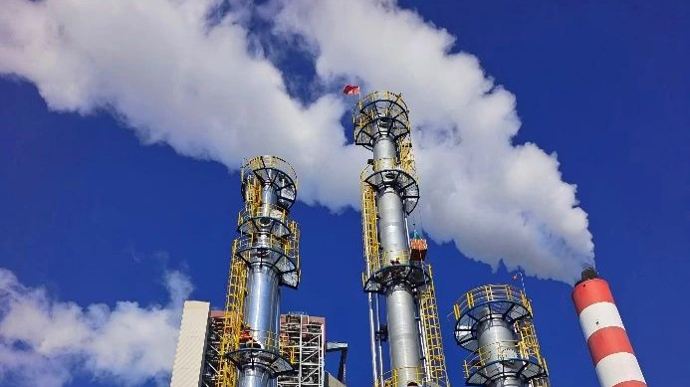
A landmark project developed by East China University of Science and Technology has successfully passed performance tests at the Waigaoqiao Third Power Plant (Waigaoqiao No. 3) in Shanghai. The project, which captures CO₂ from coal-fired power plant flue gas and converts it into methanol, operated continuously for 72 hours, achieving an average CO2 capture rate of over 95%, with a peak rate exceeding 99%. The hydrogen and CO2 conversion rates both surpassed 99%, while methanol selectivity remained above 99%.
This achievement is the result of a collaborative effort between East China University of Science and Technology and Shenergy Co., Ltd. The two partners established a demonstration unit at the Waigaoqiao No. 3 Power Plant, designed to capture CO2 from the plant’s flue gas and produce 10,000 tons of methanol annually. The system utilizes a novel composite absorbent and a modified copper-zinc-aluminum catalyst, along with multi-stage, low-grade thermal energy recovery technology, to efficiently capture CO2 and produce methanol.
The project’s key innovations include: The development of a CO2 capture process for coal-fired power plants and its conversion into methanol, creating proprietary technologies and intellectual property, and laying the foundation for a large-scale CO2 capture and chemical production industry. The use of a new absorbent that enhances the absorption rate and reduces energy consumption, specifically designed to address the challenges of high flue gas flow and low CO2 concentrations. The integration of Waigaoqiao No.3 Power Plant’s advanced heat recovery systems, optimizing the heat exchange network through pinch-point technology to maximize steam energy use. The development of a highly active modified copper-based catalyst and a two-column methanol synthesis process.
This project marks a significant step forward in the industrial-scale capture and utilization of CO2, with the potential to reduce greenhouse gas emissions while producing valuable chemical products.