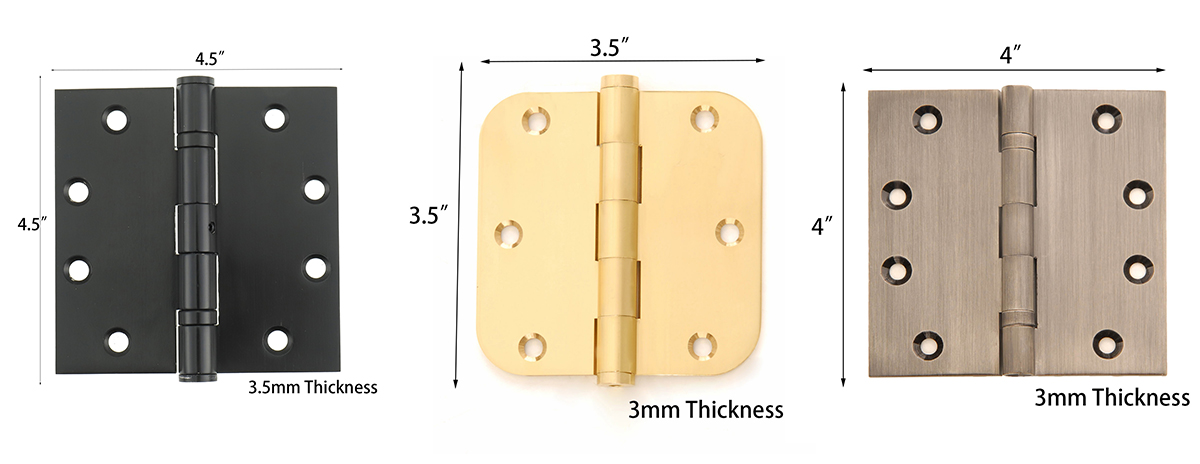
Choose Hinge
When selecting hinges, several key factors should be considered to ensure proper functionality and durability:
When selecting hinges, several key factors should be considered to ensure proper functionality and durability:
Here is a chart provides a quick reference for selecting the appropriate hinge size based on door thickness and width:
|
Thickness of Door |
Width of Door |
Hinge Size to Use |
|
Up to 1-1/2" Door |
Up to 32" |
3-1/2" Hinge |
|
Up to 1-3/4" Door |
Up to 36" |
4" Hinge |
|
Up to 2-1/4" Door |
Up to 36" |
4-1/2" Hinge |
|
Up to 2-3/4" Door |
36" to 48" |
5" Hinge |
|
Up to 3" Door |
Over 48" |
6" Hinge |
|
2-1/4" - 2-3/4" Door |
Up to 48" |
5" Heavy Duty Commercial |
|
2" - 2-3/4" Door |
Over 48" |
6" Heavy Duty Commercial |
Here's a guide on determining the number of hinges for your door, based on its height, along with some tips for selecting heavy-duty door hinges:
Number of Hinges Based on Door Height
· Under 60 inches: 2 hinges
· 60 to 80 inches: 3 hinges
· 80 to 97 inches: 4 hinges
· 97 to 109 inches: 5 hinges
· Over 109 inches: 6 hinges
Tips for Selecting Heavy-Duty Hinges
1. Door Weight: Heavy-duty doors require larger or reinforced hinges, especially for metal or solid-core wood doors.
2. High-Traffic Areas: Use ball-bearing or continuous hinges in environments with frequent door usage, such as commercial buildings.
3. Environmental Conditions: For outdoor or moisture-prone environments, select hinges made of stainless steel or coated for rust resistance.
4. Door Thickness: Match the hinge size to the door’s thickness, ensuring the hinge provides adequate support.
5. Specialty Requirements: Fire-rated or security doors might require certified hinges that comply with safety standards.
By following these guidelines, you can ensure proper functionality and longevity for your door hinges.